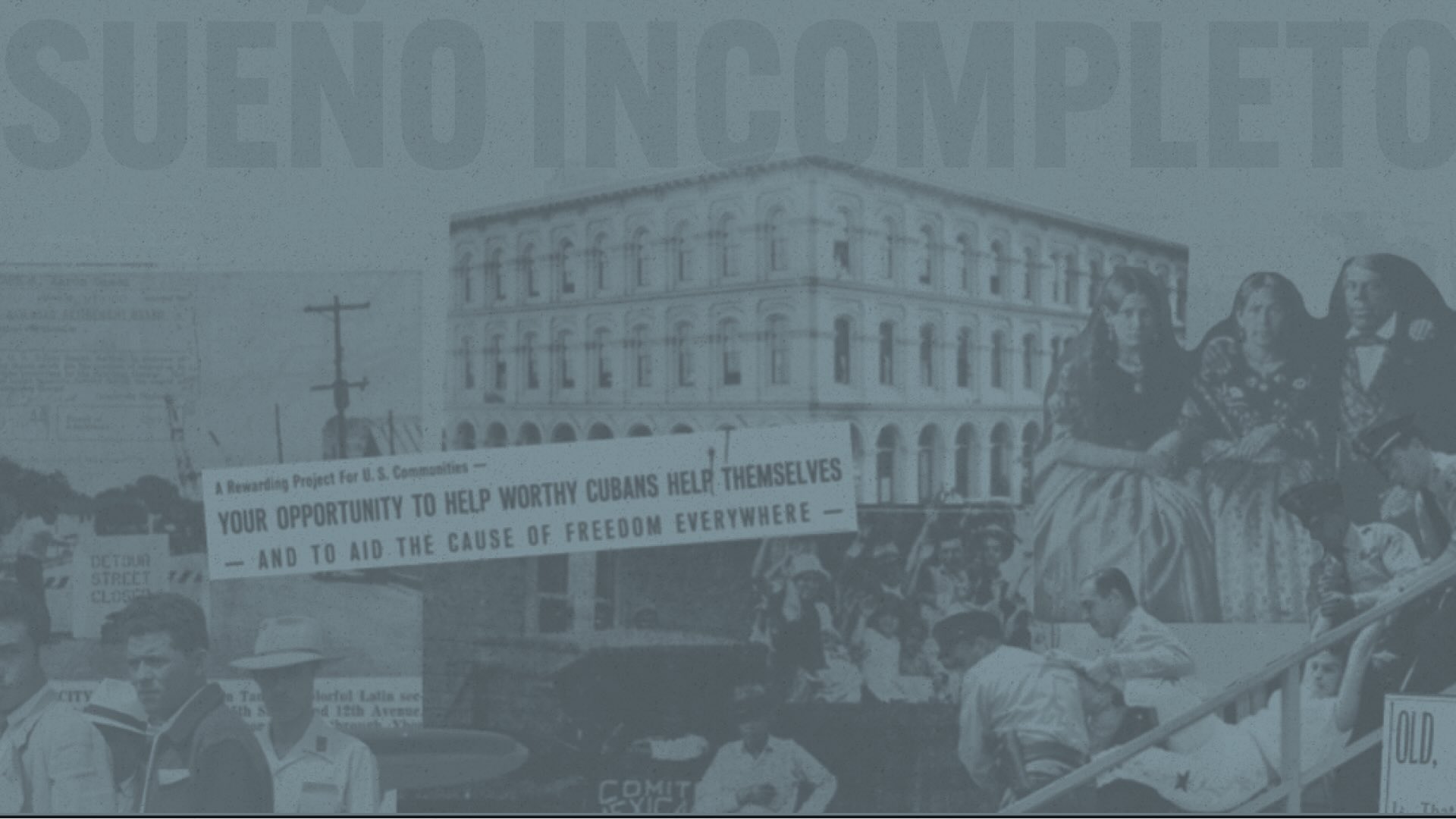
Sueño Incompleto: A History of the Latino Wealth Gap in the U.S.
About this Research Collaboration
This report, a collaboration between the UCLA Latino Policy and Politics Institute (LPPI) and UnidosUS (UUS), examines how historical and ongoing policy decisions have shaped the Latino wealth gap. Rather than attributing the Latino wealth gap to individual choices or short-term economic conditions, the project demonstrates how wealth inequality is the cumulative result of systems that have limited access to opportunity across generations.
By situating today’s disparities within a broader historical context, this project aims to deepen understanding of how the Latino wealth gap was created and why it persists. Ultimately, it highlights that closing this gap is not only a matter of equity, but essential to strengthening the U.S. economy and ensuring long-term prosperity for all.
Executive Summary
Latinos are central to the present and future of the U.S. economy. They account for nearly one fifth of the population, drive the vast majority of new workforce growth, anchor key industries, and contribute more than $4.1 trillion annually to the U.S. gross domestic product, an economy larger than that of most countries in the world. Yet these contributions have not translated into proportional financial security for Latino households.
Today, the median Latino household holds less than one quarter of the wealth of white households, a gap that has persisted for more than three decades. In 1989, the median Latino household held about seven cents for every dollar of wealth held by white households. By 2022, that figure rose to 22 cents—a modest improvement that nonetheless reflects enduring inequality. Latino households are far less likely than white households to own high‑value, appreciating assets such as homes, retirement accounts, and business equity, and more likely to rely on high‑cost debt to meet basic needs.
Through historical analysis, policy research, and data, this report traces how key systems—including immigration, housing, labor markets, public benefits, and education—have structured unequal pathways to wealth-building. Together, these systems created unequal starting points, restricted access to appreciating assets, exposed Latino families to greater economic risk, and repeatedly disrupted the intergenerational transfer of wealth.
As Latinos continue to drive population growth and labor force participation, closing the wealth gap is a prerequisite for long‑term economic stability and national prosperity for all.
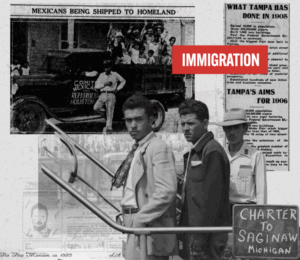
SECTION 1: RESTRICTIVE IMMIGRATION POLICIES AND FOREIGN RELATIONS
U.S. immigration law and foreign policy have created unequal pathways to legal status, shaping who can access stable work, credit, and long-term economic opportunity. These policies established a hierarchy that limited wealth-building for many Latino communities, often treating them less favorably than white European immigrants and creating disparities even within Latino groups. Over time, these differences produced lasting gaps in earnings, homeownership, and intergenerational wealth.
Section Summary
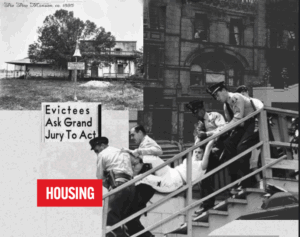
SECTION 2: LAND LOSS AND HOMEOWNERSHIP BARRIERS
Land and housing have been key to building wealth in the U.S., but Latino families have faced unequal access due to discriminatory policies. Over time, dispossession of land, devaluation of Latino neighborhoods, and barriers to fair credit have made it harder for Latino households to achieve and sustain homeownership. As a result, the primary pathway to economic security in the U.S. has consistently been limited for Latino communities.
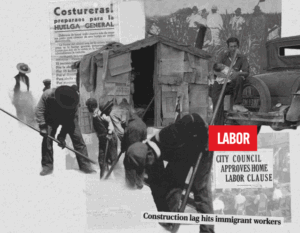
SECTION 3: UNFAIR PAY AND JOB DISCRIMINATION
Latino workers in the U.S. have historically faced barriers not from lack of work, but from labor systems and policies that keep them in low-wage, exploitative jobs while generating wealth for others. From the 19th century to today, discriminatory practices, weak labor protections, and shifts toward deregulated, globalized markets have concentrated Latino workers in insecure, low-paying sectors with limited rights and benefits. These patterns have consistently restricted their ability to build long-term wealth despite their significant contributions to the economy.
Section Summary
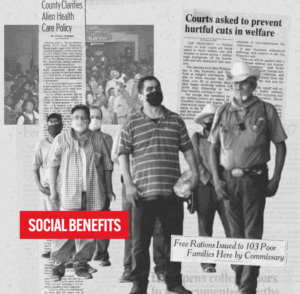
SECTION 4: EXCLUSION FROM PUBLIC BENEFITS AND SOCIAL SAFETY NET
Social benefit programs have often been designed or implemented in ways that limited Latino access, from early discretionary eligibility rules to modern requirements tied to immigration status. These policies have created barriers and “chilling effects,” discouraging even eligible mixed-status families from using essential supports. As a result, reduced access to safety net programs has increased financial instability and contributed to the persistence of the Latino wealth gap.
Section Summary
SECTION 5: EDUCATION SEGREGATION AND ACCESS BARRIERS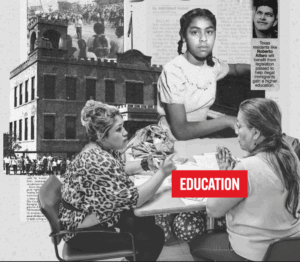
Education has often been promoted as a path to opportunity, but in practice, unequal and exclusionary policies have limited access to quality schooling for Latino communities. Segregation, language barriers, and restricted access to higher education have shaped lower educational attainment and reduced economic mobility across generations. These disparities have translated into persistent gaps in earnings, employment opportunities, and long-term wealth.
Section Summary
REPORT LAUNCH WEBINAR
To mark the release of Sueño Incompleto: A History of the Latino Wealth Gap in the United States, UCLA LPPI and UnidosUS hosted a live webinar bringing together advocates, community leaders, researchers, and policymakers for a conversation on the report’s key findings and implications.
Watch the full webinar to hear directly from the authors and partners on how this research can inform policy, advocacy, and future action.