













FOR IMMEDIATE RELEASE
Contact: lppipress@luskin.ucla.edu
UCLA Report Finds Closing Latino Opportunity Gaps Is Key to California’s Long-Term Economic Prosperity
LOS ANGELES (March 26, 2026) — A new report from the UCLA Latino Policy and Politics Institute (LPPI) shows that Latinos are central to California’s workforce and its future growth. However, deep and persistent gaps in wages, housing, health coverage, and environmental exposure continue to hold many families back, limiting the state’s ability to fully realize its economic potential.
The State of Latinos in California, 2026 examines population trends, workforce participation, education, housing, health care access, and climate risk to provide a clear picture of how Latino communities are faring across the state. The findings demonstrate that even though Latinos power the state’s economy, long-standing interconnected structural barriers continue to shape economic mobility and long-term stability.
Key findings include:
- Latinos now make up 39% of California’s workforce — nearly 7.8 million workers. Labor force participation is high among both Latino men and women, yet wage gaps remain across every major industry. Latina workers earn a median hourly wage of $18, compared to $35 for non-Latino men.
- Educational attainment is rising among younger Latinos, but gaps remain. Just 22% of Latinos ages 25–34 hold a bachelor’s degree or higher, compared to 54% of non-Latinos in the same age group.
- Latino workers are more likely to be concentrated in jobs at high risk of automation. One in three Latino men and more than one in four Latinas work in occupations highly exposed to automation — roughly double the rate of non-Latino workers.
- Homeownership continues to be a primary pathway to building wealth. Yet only 45% of Latino households own their homes, compared to 60% of non-Latino households.
- Latinos are three times more likely to be uninsured than non-Latinos (12% versus 4%). The gap is even wider among noncitizens: 30% of Latino noncitizens lack coverage, compared to 8% of non-Latinos.
- Environmental exposure also varies sharply across communities. Latino neighborhoods face higher levels of air pollution, greater proximity to hazardous sites, and more extreme heat. By mid-century, Latino communities are projected to experience nearly 20 more extreme heat days per year than non-Latino white neighborhoods.
The report also documents significant growth in Latino entrepreneurship. Latino self-employment has increased by about 44% since 2008, reaching nearly 807,000 individuals and outpacing trends among non-Latino self-employed entrepreneurs. Still, earnings disparities persist. Latino business owners earned about 38% less than their non-Latino counterparts and are more likely to operate unincorporated businesses, which can limit access to capital and long-term growth opportunities.
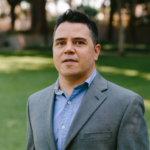
“California’s economic future depends on closing these opportunity gaps,” said Rodrigo Dominguez-Villegas, director of research at LPPI. “Latinos are driving workforce growth, entrepreneurship, and population renewal across the state. But these persistent gaps create long-term constraints. If we don’t address them, California risks slower growth, greater housing instability, and widening wealth gaps.”
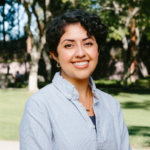
“Our analysis shows that too many Latino families are doing everything right and still facing barriers that make it harder to get ahead,” said Amada Armenta, director of LPPI. “These challenges are because of systems that have shaped opportunity across generations. We hope this report helps policymakers clearly see where those gaps exist and take meaningful steps to address them. California’s long-term prosperity depends on sustained action that expands opportunity and strengthens stability for communities across the state.”
“LPPI’s new report allows us to understand the full picture of how Latinos are doing across California,” said Senator Lena Gonzalez (D-Long Beach), Chair of the California Latino Legislative Caucus. “Latinos are a driving force in California’s economy and communities, yet too many continue to face persistent disparities in education, healthcare, housing, and workforce opportunities. This report underscores the urgency of closing these gaps and will serve as an essential tool to help us build policies that work for our communities. I’m proud to support efforts that bring visibility to these challenges and help guide policies that ensure every Californian has the opportunity to thrive.”
Read the full report here.
###
About UCLA Latino Policy and Politics Institute:
The UCLA Latino Policy and Politics Institute is a non-partisan research institute that seeks to inform, engage, and empower Latinos through innovative research and policy analysis. LPPI aims to promote equitable and inclusive policies that address the needs of the Latino community and advance social justice. latino.ucla.edu.