
The Lineage Logistics Fire in Boyle Heights: What community vulnerabilities should an equitable emergency response account for?
Photo credit
Featured photo: Naomi Nozoe on iStock.
Introduction
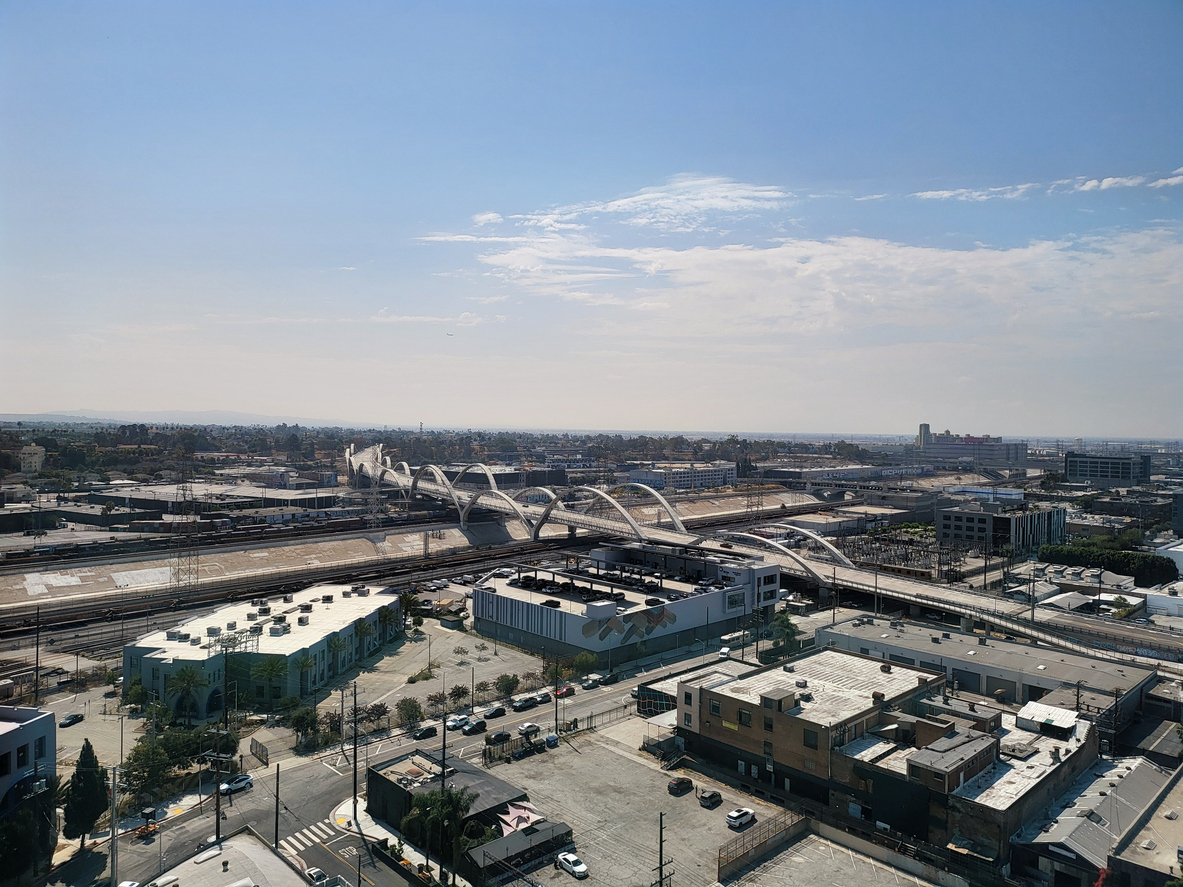
Over the past two weeks, a massive fire at a Lineage Logistics cold storage facility in Boyle Heights, Los Angeles, has triggered a variety of public health and safety concerns. The fire ignited on June 17, 2026, at the nearly 500,000-square-foot warehouse and was officially knocked down on June 24. Although active flames have been extinguished, cleanup efforts are expected to continue for an extended period, and economic, air quality and other public health concerns remain for nearby communities. The fire prompted emergency declarations from both Mayor Karen Bass and Governor Gavin Newsom, shelter-in-place orders for nearby residents and businesses, the opening of smoke relief centers to assist those impacted, and the relocation of several nearby schools.1
The two most directly affected communities are Boyle Heights on the eastern edge of the City of Los Angeles and the adjacent unincorporated community of East Los Angeles (East LA). These predominantly Latino working-class communities are historically and culturally rich and experience longstanding environmental, economic, and public health inequities.2 These gaps are consistent with findings from UCLA LPPI’s Latino Climate and Health Dashboard, which documents disparities in environmental exposures, health conditions, and socioeconomic resources across Latino neighborhoods in LA County. The warehouse fire compounds these preexisting health conditions, exposing an already overburdened community to another environmental health challenge.
Although the Lineage Logistics facility is located in the southeast corner of Boyle Heights, smoke, air quality, and economic impacts have extended beyond the immediate area into surrounding neighborhoods, including East LA. Building on our previous analysis of workers and jobs within the smoke advisory zone, this brief examines the demographic, socioeconomic, housing, and environmental characteristics of residents in the smoke advisory area to identify community factors that may increase vulnerability to smoke exposure and to inform equitable emergency response and recovery efforts.
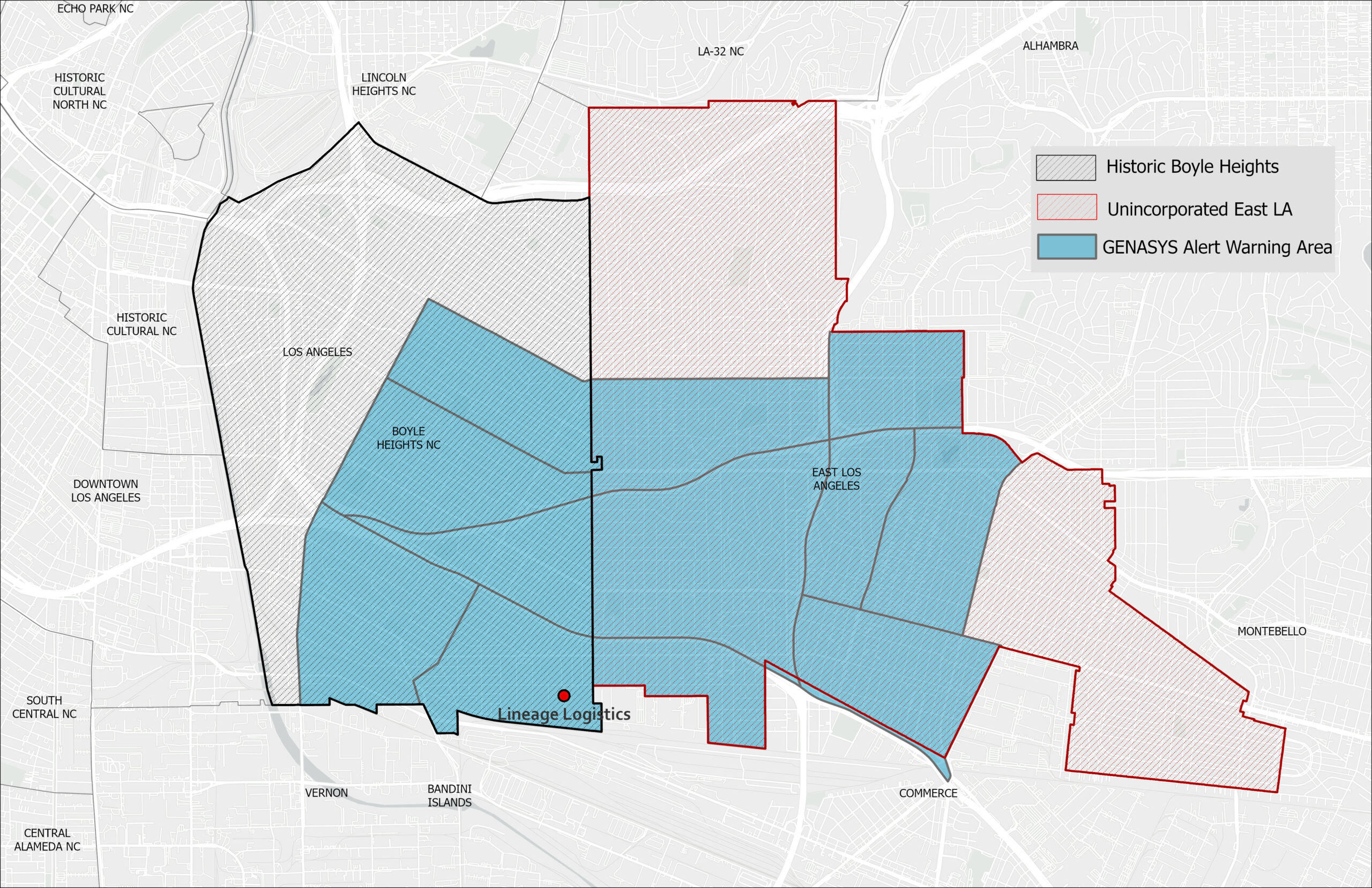
Figure 1 shows the smoke advisory zone, which encompasses most of Boyle Heights and portions of unincorporated East LA. Approximately 100,500 residents live within the smoke advisory area.3 The Lineage Logistics warehouse, where the fire originated, is located in the southeast corner of Boyle Heights near the boundary with East LA. The smoke advisory zone is defined using the Los Angeles County Public Emergency Map Genasys Alert and Warning Notification Area as issued on June 22, 2026, at 12:27 p.m. According to Genasys, these zones are used by public officials to communicate emergency information to specific geographic areas and may be predefined or created in response to a particular incident.4 Although this analysis uses the official smoke advisory zone as its study area, smoke traveled beyond these administrative boundaries depending on wind and weather conditions.
Figure 1: Lineage Logistics Warehouse Fire Smoke Advisory Zone, June 22, 2026
Data and Methods
The analysis uses the Genasys smoke advisory boundary shown in Figure 1 to approximate the area affected by the June 2026 warehouse fire. Demographic, housing, socioeconomic, and language characteristics were estimated using the 2020-2024 American Community Survey (ACS) 5-Year Estimates. Census Block Groups are used where data are available to provide a finer geographic representation of the advisory area, while Census Tracts are used for indicators not published at the Block Group level, including language, English proficiency, and nativity.
Environmental and health burden indicators are drawn from Draft CalEnviroScreen 5.0 and aggregated to the smoke advisory area using population-weighted averages of Census tract-level indicators. Estimates of household air conditioning come from the U.S. Census Bureau’s Local Air Conditioning Estimates (LACE). Throughout this brief, characteristics of the smoke advisory area are compared with those of LA County to provide context for the observed conditions. All data should be interpreted as estimates rather than precise counts.
What makes it harder for residents to stay after the fire?
Finding 1: The fire is compounding existing environmental and health burdens.
The smoke advisory area already faced disproportionately high environmental burdens and poorer baseline health conditions than LA County. The warehouse fire compounds these existing challenges by adding another source of pollution exposure. Research has shown that exposure to smoke from large fires is associated with adverse respiratory and cardiovascular health effects, suggesting that populations with preexisting respiratory and cardiovascular conditions may be especially vulnerable.5
- Higher cumulative environmental and population burden: The smoke advisory area’s CalEnviroScreen 5.0 score (63.4) is about 63% higher than LA County (38.8), indicating greater cumulative environmental, health, and socioeconomic disparities.6
- Substantially higher diesel pollution: Diesel PM exposure is approximately three times the county average (0.3 vs. 0.1 tons per year, respectively).
- Higher respiratory and cardiovascular health burden: Asthma-related emergency department visit rates are 20% higher than the county average (49.8 vs. 41.4), while cardiovascular disease-related emergency department visit rates are 27% higher (19.7 vs. 15.5).7
Finding 2: Most residents have less financial cushion to absorb the costs of smoke exposure and disruption.
Economic insecurity and limited access to health care may limit residents’ ability to protect themselves from smoke exposure and recover from smoke-related health impacts. These conditions suggest that many households have fewer financial resources to absorb the costs associated with smoke-related illness, lost income, or other disruptions.
- Lower per capita income: Per capita income is about half that of LA County ($27,300 vs. $55,100).
- Higher poverty rate: Twenty-one percent of residents live below the federal poverty line, compared with 14% countywide.
- Lower health insurance coverage: Sixteen percent of residents lack health insurance, twice the county rate (16% vs. 8%).
Finding 3: For many households, staying indoors may not be simple or safe when poor air quality and extreme heat overlap.
Public health guidance during periods of poor air quality recommends staying indoors and keeping windows and doors closed to reduce exposure to smoke and other air pollutants.8 However, these recommendations may be difficult for some households to follow during periods of extreme summer heat. Older housing and limited access to cooling may reduce residents’ ability to maintain healthy indoor air quality during smoke events. For households without air conditioning, this can create difficult tradeoffs between keeping windows closed to reduce smoke infiltration and opening windows to relieve indoor heat.9 These challenges are particularly relevant because the warehouse fire occurred during the summer, when residents without air conditioning may have difficulty following recommendations to keep windows and doors closed.
- Predominantly renter community: Seventy-one percent of occupied housing units are renter occupied, compared with 54% countywide.
- Older housing stock: Nearly 4 in 10 occupied housing units (39%) were built before 1940, compared with 14% countywide.
- Limited access to cooling: Nearly 10,000 households (about one-third of occupied households) lack air conditioning.
Finding 4: Language barriers may limit access to critical emergency information unless it is tailored to community needs.
The smoke advisory area is home to a vibrant Latino community with substantial immigrant and multilingual populations. An equitable emergency response should ensure that emergency alerts, public health guidance, and recovery resources are culturally and linguistically appropriate. Effective communication will depend on delivering information in residents’ preferred languages and through trusted community organizations and messengers. These efforts may be particularly important at a time when heightened immigration enforcement activities may discourage some immigrant families from engaging with government agencies or seeking available public services, including health care.10
- Predominantly Latino community: Ninety-six percent of residents identify as Latino, compared with 48% countywide.
- Larger immigrant population: Forty-two percent of residents are foreign-born, compared with 33% countywide.
- Higher prevalence of limited English proficiency (LEP): Thirty-nine percent of residents age 5 and older are limited English proficient, compared with 23% countywide.
- Spanish-language outreach is essential: Ninety-eight percent of LEP residents speak Spanish, underscoring the importance of Spanish-language emergency alerts, public health guidance, and recovery resources.
Conclusion
The Lineage Logistics warehouse fire has affected a community that already faces disproportionate environmental, economic, and health burdens. Residents living within the smoke advisory area experience higher levels of pollution exposure, greater baseline health risks, lower incomes, higher poverty rates, older housing, and greater language barriers than LA County overall. These conditions may limit residents’ ability to protect themselves from pollution exposure and recover from its health and economic impacts.
Although the fire has been extinguished, cleanup and recovery efforts are expected to continue for an extended period. Recovery is also occurring at a time when changes to Medi-Cal eligibility and enrollment may further reduce access to health care for some residents.11 These overlapping challenges underscore the need for sustained public health support, culturally and linguistically appropriate outreach, and equitable recovery strategies that prioritize communities facing the greatest cumulative burdens.
Acknowledgments
This brief was made possible with the generous support of the James Irvine Foundation. The authors thank Belem Lamas, Alberto Lammers, and Lila Burgos for their valuable insights and review, as well as Adriana Perez for her design support, and Alberto Lammers and Cristian Rivera for their support with dissemination and media outreach.
The UCLA Latino Policy and Politics Institute and the UCLA Center for Neighborhood Knowledge acknowledge the Gabrielino and Tongva peoples as the traditional land caretakers of Tovaangar, the Los Angeles basin and Southern Channel Islands, and recognize that their displacement has enabled UCLA’s flourishing. As a land-grant institution, we pay our respects to the Honuukvetam (Ancestors), Ahiihirom (Elders), and Eyoohiinken (our relatives’ nations), past, present, and emerging.
References
1. Hayley Smith and Laurence Darmiento, “What We Know About the Boyle Heights Fire,” The Los Angeles Times, June 20, 2026, available online; Jonathan Lloyd and Lauren Coronado, “LAUSD Relocates Some Summer Programs Due to Boyle Heights Fire,” NBC Los Angeles, June 22, 2026, available online. ↩
2. East LA Community Corporation, “Boyle Heights,” ArcGIS StoryMaps, accessed June 2026, available online; Erica J. Montes, Nadereh Pourat, and Allison L. Golden, “Access to and Use of Health Care Services Among Latinos in East Los Angeles and Boyle Heights,” Health Services Research 51, no. 5 (2015): 1482–1501, available online. ↩
3. Authors’ tabulations of the 2020–2024 American Community Survey 5-Year Estimates using Census Block Groups that approximate the smoke advisory zone.
4. See GENASYS “What’s a Zone?” definition, accessed June 23, 2026, available online. ↩
5. Colleen E. Reid, Michael Brauer, Fay H. Johnston, Michael Jerrett, John R. Balmes, and Catherine T. Elliott, “Critical Review of Health Impacts of Wildfire Smoke Exposure,” Environmental Health Perspectives 124, no. 9 (2016): 1334-1343, available online. ↩
6. CalEnviroScreen 5.0 is California’s environmental justice screening tool. Higher overall score indicates greater cumulative burden, with higher scores indicating greater environmental and public health disadvantage.↩
7. Rates represent annual age-adjusted emergency department visits per 10,000 residents. ↩
8. Centers for Disease Control and Prevention, “Health Alert Network (HAN) – 00495: Wildfire Smoke Health Advisory,” accessed June 29, 2026, available online. ↩
9. Gary Adamkiewicz, Ami R. Zota, M. Patricia Fabian, Tara Chahine, Renee Julien, John D. Spengler, and Jonathan I. Levy, “Moving Environmental Justice Indoors: Understanding Structural Influences on Residential Exposure Patterns in Low-Income Communities,” American Journal of Public Health 101, no. S1 (2011): S238-45; Lori Pottinger, “When a Lack of Air Conditioning Is a Public Health Threat,” Public Policy Institute of California, August 17, 2020, available online. ↩
10. Paul M. Ong, Caylin Luebeck, Chhandara Pech, Rosario Majano, Vinna Lee, Naya Lee, and Arturo Vargas Bustamante, Medi-Cal Enrollment Declines Amid Heightened Immigration Enforcement in California (Los Angeles: UCLA Latino Policy and Politics Institute, June 22, 2026), available online. ↩
11. Rosario Majano, Jie Zong, Ahmad Ismail, Silvia R. Gonzalez, and Arturo Vargas Bustamante, Medi-Cal on the Chopping Block: Key Facts About Medi-Cal Beneficiaries (Los Angeles: UCLA Latino Policy and Politics Institute, April 23, 2025), available online. ↩