


FOR IMMEDIATE RELEASE
Contact: lppipress@luskin.ucla.edu
New UCLA Analysis Finds Latino Workers Central to Wildfire Recovery in Los Angeles County Face Lower Wages and Weaker Economic Safety Nets
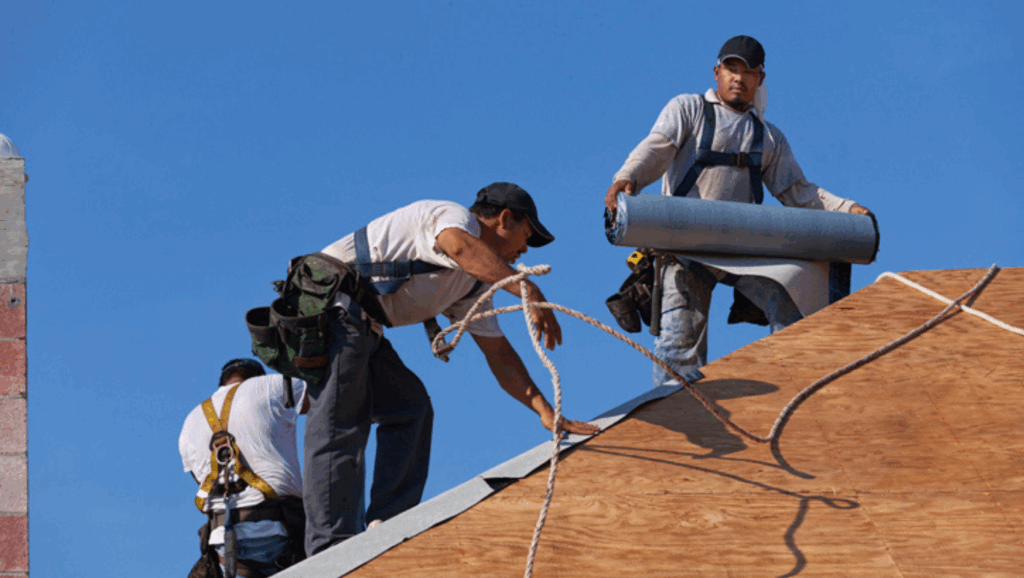
LOS ANGELES (April 15, 2026) — A new factsheet from the UCLA Latino Policy and Politics Institute (LPPI) and the UCLA Center for Neighborhood Knowledge (CNK) shows that Latino workers are disproportionately concentrated in the occupations most essential to wildfire recovery in Los Angeles County, while also facing lower wages, health insurance coverage, and significant gaps in unemployment insurance protection.
The analysis, authored by Silvia González, Paul M. Ong, Yina Marin, and Chhandara Pech, examines the workforce connected to the January 2025 Eaton and Palisades wildfires. It shows that recovery depends heavily on Latino workers who are already economically vulnerable for debris removal, construction, utility repair, landscaping, and other rebuilding needs.
Latinos represent about 4 out of 5 workers in post-fire recovery occupations. Among those workers, the median earnings are $36,000, compared to about $54,000 for non-Latino White workers. Latinos in these occupations are also less likely to have health insurance coverage.
“Latinos are essential workers for the recovery process. It won’t happen on its own. It depends on workers whose labor is crucial to rebuilding homes, infrastructure, and daily life,” said González, research director at LPPI. “The analysis shows that these workers often lack the economic protections and basic supports that should accompany such essential roles.”
The factsheet also shows that economic vulnerability tied to wildfire disruption extends beyond the burnscarred communities. “Many workers employed in fire-impacted areas commute from surrounding neighborhoods with larger Latino populations, meaning that job interruptions, delayed rebuilding, and business closures can have consequences well beyond the burn perimeter,” said Pech.
An estimated 32% of workers in Altadena and 28% of those in Pacific Palisades are not covered by unemployment insurance. Among residents of those communities, about 14% may also lack that coverage, even if they work elsewhere. These gaps raise concerns about how workers and families sustain themselves when disasters disrupt income streams.
“These findings are especially important because they show how recovery is shaped not only by physical damage, but by the conditions facing the workforce who are doing the rebuilding,” said Ong, director of CNK. “An equitable recovery requires attention to the workers who make it possible and to the communities that depend on their income.”
The authors call attention to the need for recovery strategies that account for the labor force sustaining cleanup and reconstruction, including stronger worker protections, better access to healthcare, and policies that help stabilize families facing income loss after disasters.
Read the full factsheet here.
###
About UCLA Latino Policy and Politics Institute:
The UCLA Latino Policy and Politics Institute is a non-partisan research institute that seeks to inform, engage, and empower Latinos through innovative research and policy analysis. LPPI aims to promote equitable and inclusive policies that address the needs of the Latino community and advance social justice. latino.ucla.edu.