








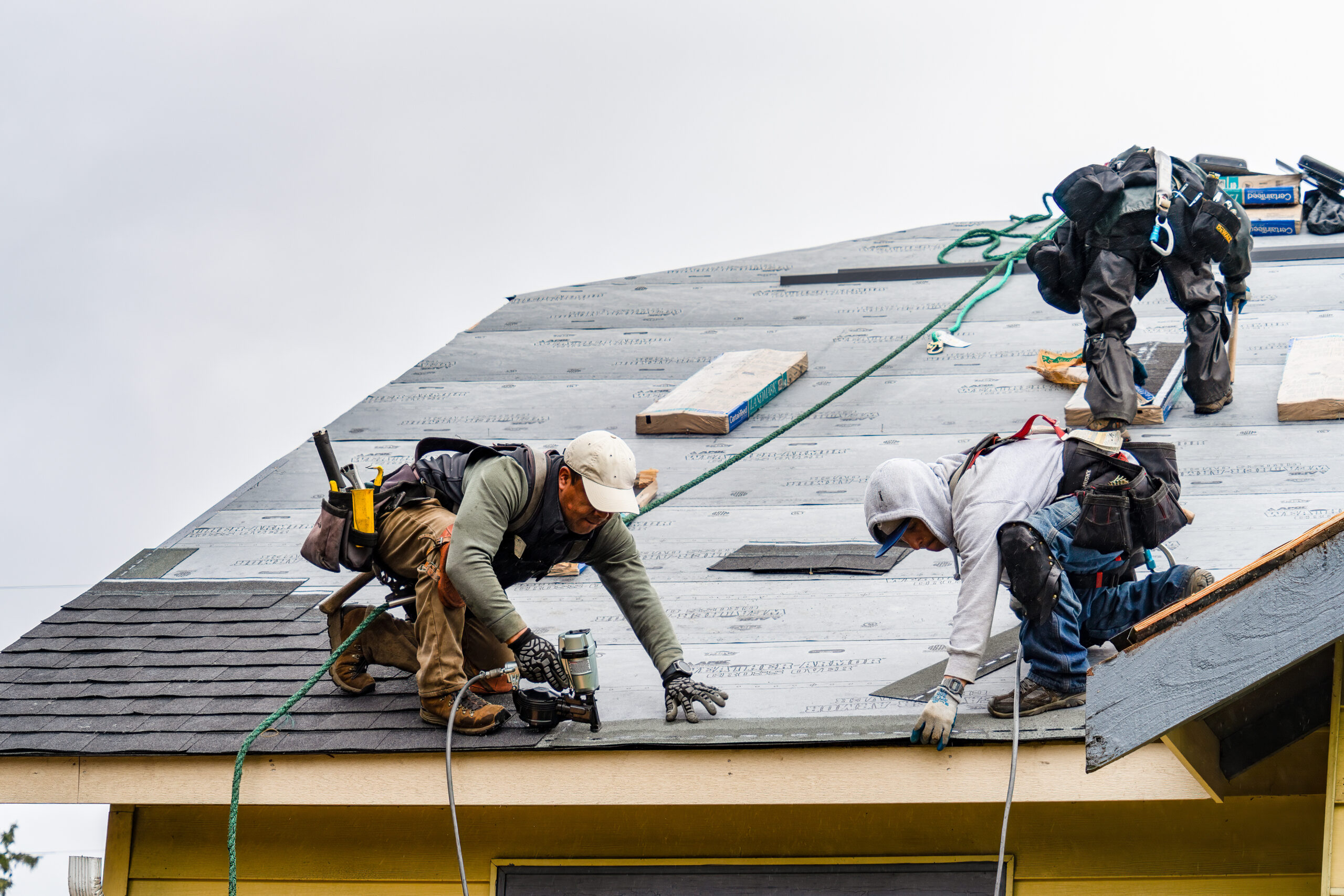
The Invisible Workforce in Wildfire Recovery Occupations
Introduction
The January 2025 fires in Los Angeles County demonstrated that wildfires in California are no longer confined to wildlands or rural areas but may increasingly occur near densely populated urban areas known as the wildland-urban interface.1 The Eaton and Palisades fires illustrate this shift, with impacts that were both immediate and visible. The two fires alone disrupted daily life for at least 290,000 residents,2 burned more than 38,000 acres, damaged over 16,000 structures, and resulted in the tragic loss of at least 31 civilian lives.3 Even residents outside the fire perimeter experienced disruptions through evacuation orders and exposure to hazardous air quality, business and job losses.4 As the region recovers, the ongoing efforts to clean up, repair, and rebuild depend on a workforce whose contributions are far less visible than the destruction left behind by the fires.
This data brief draws on multiple public data sources to examine who makes up this workforce, where workers in fire-impacted areas live, and the extent to which they have access to unemployment insurance coverage. We find that the majority of workers in post-fire recovery occupations are Latino and face structural disadvantages, including lower wages, limited access to health insurance, and gaps in unemployment insurance coverage. We also find that many workers employed in the Eaton and Palisades fire zones commute from surrounding neighborhoods, meaning the economic disruptions caused by wildfires ripple to areas beyond the fire-impacted areas. These findings provide important insights for policymakers, community organizations, and others working to advance a coordinated, data-driven recovery for the communities, workers, and businesses affected by January 2025 wildfires.
Data & Approach
This data brief draws on multiple data sources to analyze the workforce composition, economic hardships, and unemployment insurance coverage of workers in occupations and industries important to post-fire recovery and rebuilding. We use the American Community Survey Public Use Microdata Sample (ACS PUMS) to understand the racial and ethnic composition and socioeconomic characteristics of these workers, including their industry, earnings, poverty status, and health insurance coverage. Throughout this brief, Black, Asian, and white categories refer to non-Latino individuals, whereas Latinos may be of any race. Worker commuting patterns were analyzed using the Longitudinal Employer–Household Dynamics (LEHD) Origin–Destination Employment Statistics (LODES) dataset produced by the U.S. Census Bureau. To estimate potential gaps in unemployment insurance (UI) coverage, we compared two complementary datasets, LODES and Census Transportation Planning Products (CTPP). Fire-impacted communities are defined as those located within mandatory evacuation zones and evacuation warning zones as outlined by CalFire on January 8, 2025 at 2 p.m. PST and approximated at the census tract level to maintain consistency across datasets. Additional details on data sources and methodology are provided in the accompanying technical appendix.
Key Findings
Finding 1: Latino workers are disproportionately concentrated in post-fire recovery occupations in Los Angeles County.
After the devastating Eaton and Palisades fires, hundreds of workers from across Los Angeles were mobilized by local organizations for cleanup and recovery efforts, highlighting the essential role that non-emergency workers play in community resilience after wildfire events.5 To better understand who makes up this workforce, Figure 1 compares the racial and ethnic composition of the overall labor force in Los Angeles County with that of workers in post-fire recovery-related occupations, such as debris removal, utility repair, and landscaping.
Latinos make up nearly half (47%) of the civilian labor force in Los Angeles County, but account for 4 out of 5 workers (81%) employed in post-fire recovery occupations. This represents more than 267,000 Latino workers across the County and nearly twice their relative share of the labor force. In contrast, white workers represent a little over a quarter (27%) of the labor force but only about 10% of workers in these same occupations. This pattern highlights that Latino workers are disproportionately concentrated in critical but physically demanding and high-risk roles required to rebuild communities after natural disasters like wildfires.
Figure 1. Racial and Ethnic Composition of the Civilian Labor Force and Workers and Occupations Related to Post-Fire Recovery Occupations, Los Angeles County
Note: Post-fire recovery occupations include debris removal, infrastructure repair, utilities, and landscaping, amongst others. See Technical Appendix for more details.
Source: Authors’ analysis of data from the Census Bureau’s American Community Survey 2019-2023 5-year PUMS.
Finding 2: Latino workers in post-fire recovery occupations earn less and face higher poverty.
While Latino workers make up the majority of workers in post-fire recovery occupations, they are not compensated at the same level as workers from other racial and ethnic groups in post-fire recovery occupations and face greater economic precarity. Figure 2 shows the median earnings and poverty rates of workers in post-fire recovery occupations by race and ethnicity.
Among workers in post-fire recovery occupations, Latino workers are the lowest paid, with median annual earnings of approximately $36,000 compared to about $54,000 for white workers. These disparities in earnings are also reflected in higher levels of economic hardship. About 11.4% of Latino workers in these occupations live below the poverty line, compared to 7.7% of white workers. These patterns highlight structural inequities within the post-disaster recovery labor market.
Figure 2. Median Earnings and Poverty Rates of Workers in Post-Fire Recovery Occupations by Race and Ethnicity, Los Angeles County
Note: Earnings are adjusted to 2023 dollars. The universe includes individuals aged 16 and over who are in the civilian labor force and work in post-fire recovery occupations. See the Technical Appendix for more details.
Source: Authors’ analysis of data from the Census Bureau’s American Community Survey 2019-2023 5-year PUMS.
Finding 3: Latino workers in post-fire recovery occupations are less likely to have health insurance.
Much of post-fire recovery work involves physically demanding tasks and potential exposure to hazardous conditions, making access to timely health care especially important for workers in these occupations. However, disparities in health insurance coverage persist. Figure 3 shows health insurance coverage of workers in post-fire recovery occupations by race and ethnicity. Latino workers have the lowest rate of health insurance coverage, at about 66%, compared to roughly 88% to 90% for other groups.
Latino workers already face health vulnerabilities. For instance, Latinos tend to live in neighborhoods with high levels of air pollution, which may contribute to significant health inequities, such as higher rates of asthma-related emergency room visits.6 Wildfire smoke can further exacerbate pollution levels and preexisting health conditions, compounding the health risks faced by uninsured workers in post-fire recovery occupations.
Figure 3. Health Insurance Coverage of Workers in Post-Fire Recovery Occupations by Race and Ethnicity, Los Angeles County
Note: The universe includes individuals aged 16 and over who are in the civilian labor force and work in post-fire recovery occupations. See Technical Appendix for more details.
Source: Authors’ analysis of data from the Census Bureau’s American Community Survey 2019-2023 5-year PUMS.
Finding 4: Workers connected to fire-impacted communities face gaps in unemployment insurance protection.
Workers connected to fire-impacted communities, both those who live in these areas and those employed there, may face gaps in unemployment insurance (UI) coverage. Figure 4 shows estimated unemployment insurance non-coverage rates of workers in fire-impacted communities. We estimate that 32% of workers employed in Altadena and 28% in Pacific Palisades fall outside UI-covered employment, regardless of race or ethnicity. Among residents of these communities, about 14% may also lack coverage, even if they work elsewhere. These findings suggest that a substantial share of workers affected by wildfire-related disruptions may not have access to unemployment benefits. In the aftermath of climate disasters, gaps in coverage raise serious concerns about economic stability and recovery, particularly for workers who may lose wages due to business closures, delayed rebuilding, or interruption in work.
Finding 5: Economic impacts may extend beyond fire-impacted areas, particularly to Latino neighborhoods where workers live.
The economic impacts of wildfires are not confined to the areas directly affected by fire, as many workers employed in these communities commute from surrounding neighborhoods. Figure 5 shows the average percentage of Latino residents in the neighborhoods where workers live, by commuting pattern. Workers commuting into fire-impacted areas often live in neighborhoods with higher Latino populations. For example, workers commuting into the Eaton fire area come from census tracts (a proxy for neighborhoods) that are, on average, 45% Latino, while those commuting into the Palisades area come from tracts that are about 36% Latino. This means that when wildfires disrupt local employment, the impacts can extend beyond the fire-impacted areas, affecting household incomes and economic stability in nearby Latino communities that depend on these jobs.
Figure 5. Average Percent Latino in Workers’ Home Neighborhoods by Commuting Pattern in Fire-Impacted Communities, Los Angeles County
Note: Values represent the average Latino share of workers’ home census tracts within each commuting category; categories are not additive. See the Technical Appendix for more details.
Source: Authors’ analysis of U.S. Census Bureau, LEHD LODES (2018–2022) and ACS (2018–2022); CAL FIRE wildfire perimeter GIS shapefiles.
Conclusion
Workers in post-fire recovery occupations are essential to supporting tasks such as debris clearing, repair, and rebuilding. Despite the critical role they play in community resilience, many of these workers are among the most economically vulnerable. Latino workers are heavily concentrated in post-fire recovery occupations and face the lowest earnings, along with limited access to health insurance and to safety net programs such as unemployment insurance. At the same time, the impacts of wildfires may extend beyond fire-affected areas. Many workers commute into fire-impacted communities; therefore, when wildfires disrupt work in these areas, the impacts are not limited to the local economy and can also affect the economic stability of surrounding neighborhoods, including many Latino communities. These patterns underscore the importance of considering the full workforce behind recovery efforts. Strengthening economic protections and ensuring access to safety net programs are critical steps toward an equitable recovery that does not leave behind the workers who play a central role in rebuilding communities after disasters.
End Notes
1. Qiu, Minghao, Deyang Chen, Makoto Kelp, Jing Li, Guanyu Huang, and Mahdieh Danesh Yazdi. “The rising threats of wildland-urban interface fires in the era of climate change: The Los Angeles 2025 fires.” The Innovation 6, no. 5 (2025), available online.
2. Pech, Chhandara, Silvia R. González, and Albert Kochaphum. Wildfires and Latino Communities: Health, Economic, and Preparedness Challenges. Los Angeles: UCLA Latino Policy & Politics Institute, University of California, Los Angeles, January 2025, available online.
3. California Department of Forestry and Fire Protection (CAL FIRE), “Palisades Fire,” January 7, 2025, available online; and “Eaton Fire,” January 7, 2025, available online.
4. See for example, Eaton Fire Residents United, “Eaton Fire Contamination Map,” accessed on April 13, 2026, available online. Los Angeles County Economic Development Corporation (LAEDC), “Los Angeles Wildfires: Economic Update #2,” January 21, 2026, available online.
5. Labor Occupational Safety and Health (LOSH) Program, “LOSH Supports Workers in the Aftermath of the 2025 Los Angeles Fires,” January 26, 2026, available online.
6. Silver, Julia, Silvia Gonzalez, Rosario Majano, Samantha Alejandre, Belem Lamas, Cesar Montoya, Eduardo Garcia, and Arturo Bustamante. “Cleaner Air, Healthier Communities: A Policy Advocacy Toolkit for California’s Latino Communities.” (2025), available online.
Acknowledgments
This data brief was made possible through the generous support of the James Irvine Foundation and UCLA Office of the Vice Chancellor for Research & Creative Activities (ORCA) to develop research that informs domestic policy challenges impacting communities during disaster recovery. The authors are grateful to Julia Silver for the review and to Angelina Wu for design support.
The UCLA Latino Policy and Politics Institute and the UCLA Center for Neighborhood Knowledge acknowledge the Gabrielino Tongva peoples as the traditional land caretakers of Tovaangar (the Los Angeles basin and So. Channel Islands). As a land grant institution, we pay our respects to the Honuukvetam (Ancestors), ‘Ahiihirom (Elders), and ‘Eyoohiinkem (our relatives nations), past, present, and emerging.
Disclaimer
The views expressed herein are those of the authors and not necessarily those of the University of California, Los Angeles as a whole. The authors alone are responsible for the content of this report.
For More Information
Contact: lppipress@luskin.ucla.edu
© April 2026 by the Regents of the University of California, Los Angeles. All rights reserved. Printed in the United States.




Figure 4. Estimated Unemployment Insurance Non-Coverage Rates of Workers in Fire-Impacted Communities, Los Angeles County
Notes: “Place of residence” refers to workers who live in the community, regardless of where they work. “Place of work” refers to workers employed in the community, regardless of where they live. These groups may overlap and should not be summed. Geographic areas are approximated using census tracts for each community. See Technical Appendix for more details.
Source: Authors’ analysis of U.S. Census Bureau, LEHD LODES (2017–2021) and Census Transportation Planning Products (CTPP) (2017–2021).