







Webinar on Documenting the Economic Harm of ICE Enforcement
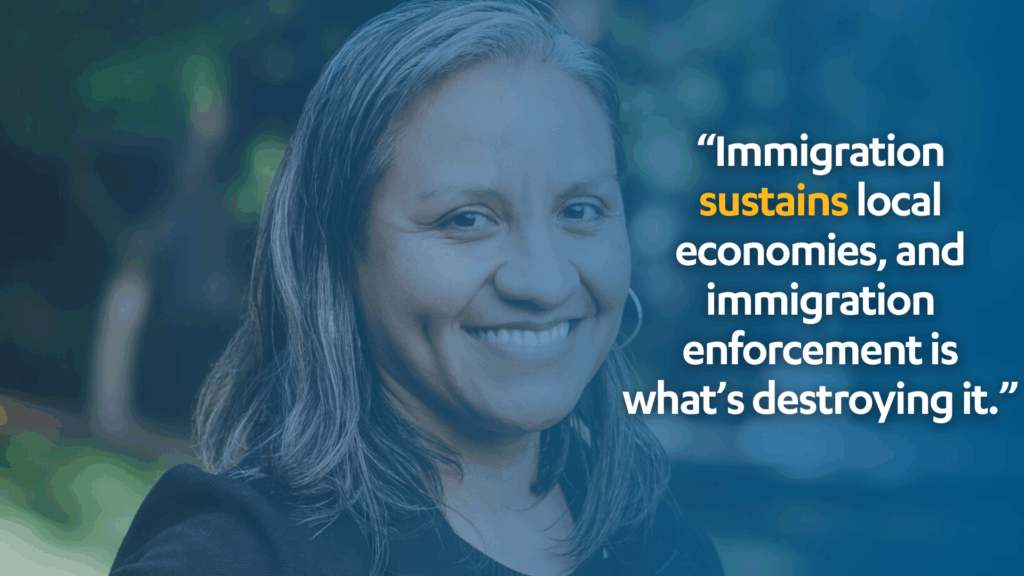
On February 25, LPPI Director Dr. Amada Armenta joined a discussion on the importance of documenting the harm that immigration enforcement causes to local economies. She highlighted LPPI’s research on the impact of ICE raids to business corridors in Los Angeles.
The webinar was hosted by the Bay Area Asset Funders Network and sponsored by the Latino Community Foundation. Over 75 program officers, researchers, and community development leaders were in attendance.
Rudy Espinoza, president and CEO of Inclusive Action for the City, opened the conversation with the story of Tanya, a small business owner struggling to fight cancer, raise a child, and keep her storefront open after federal immigration agents scared her customers away. He emphasized the need for data that centers the experiences of entrepreneurs like Tanya to inform advocates, government, and elected officials.
LPPI is currently studying this need by measuring changes in foot traffic to LA neighborhoods impacted by immigration raids from the day of the raid to the week after, Armenta described. She and other UC professors are using a spatial dataset that shows movement in and out of spaces based on pings from cell phone apps that track location.
Armenta’s preliminary findings show that foot traffic drops by 6-30% in the week after the raid. The research team will translate that loss into dollar amounts and conduct qualitative interviews with small business owners to capture the immediate, medium, and long-term economic impacts of ICE activity.
“Immigration sustains local economies, and immigration enforcement is what’s destroying it,” Armenta said.
Efforts like LPPI’s to demonstrate harms to immigrant communities through economic data are a “critical but underfunded piece of movement infrastructure,” said Monica Gomez, a program officer for The California Wellness Foundation and panel moderator.
Espinoza and Veronica Vences, vice president of economic justice and opportunity at the Latino Community Foundation, concluded the panel with a call to invest in efforts to protect, support, and fight for street vendors and families impacted by ICE.
“This is economic destabilization by design and it hurts all of us,” Vences said.