Recovery Starts Here: Margarita “Maggie” Cortez
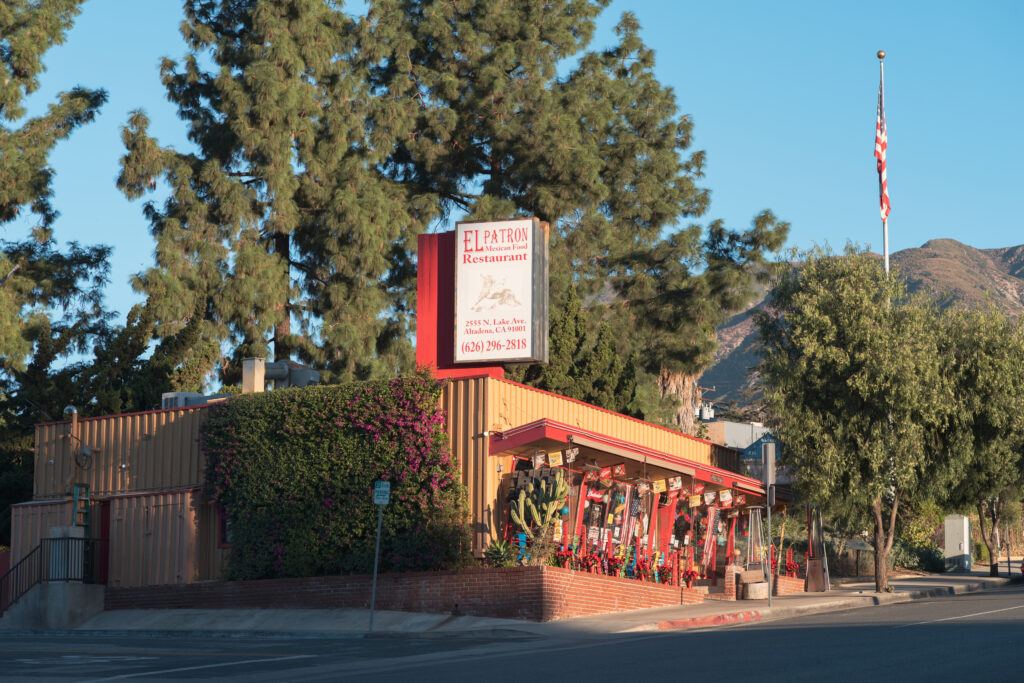
Margarita “Maggie” Cortez is a single mother of three and the owner of El Patron Mexican Food Restaurant, a 15-year fixture on Lake Avenue in Altadena. There was no Mexican restaurant on that stretch of the street when Maggie opened El Patron. For a decade and a half, it became something more than a restaurant – it became, in Maggie’s words, familia.
Running El Patron was never without its challenges. COVID-19 nearly broke the business, with daily revenue dropping to as low as $300. It was her community, who became like family, that kept her going, urging her not to close and returning as soon as they could. By late 2024, things were finally stabilizing.
Then, in January 2025, the Altadena Fire came.
Maggie stayed in Altadena while it burned. She sent her children to her father’s house in nearby Pasadena, then came back to fight for her community. She drove to El Patron at seven in the morning with the fire still raging around her. When she realized there was nothing she could do, she made the difficult decision to leave.
Miraculously, El Patron survived. But surviving the fire was only the beginning.
“When I needed them, no one was here to help us.” — Maggie, on emergency response during the fires
Maggie reopened El Patron on March 17th, a moment she describes with joy. The restaurant was full. Customers who had lost their homes came to eat, to grieve together, to hold onto something. For a few months, she had 13 employees and a full house. Then the community dispersed – to Glendora, Duarte, Monrovia, New Mexico, Arizona – and business dropped sharply. Today, her cooks work around 30 hours a week; her waitstaff, just 14. She has done everything in her power not to lay anyone off.
The financial recovery has been grueling. Maggie received a $75,000 state loan, a $1,500 grant from the Altadena Chamber of Commerce, and a $5,000 state grant. But in the five to six months it took for the grants to arrive, she relied on personal savings and credit cards to survive. A single Edison bill can run $1,400 – roughly the same as the Chamber grant. Her insurance did not pay out for three to four months after the fire.
Navigating the relief landscape has been its own ordeal. Grant applications demanded extensive documentation and moved slowly. Maggie depended heavily on her accountant to complete them. Tight deadlines often left her feeling like she’d missed her window. Beyond the paperwork, a deeper barrier shaped how much aid Maggie even attempted to access: fear of fraud. Wildfire relief scams were widespread, and Maggie had heard of people obtaining her information and impersonating her to apply tofraudulent grant programs. The experience left her deeply mistrustful of any outreach she could not verify through someone she already knew and trusted.
“A veces pienso, ok, trato de agarrar este grant, y ¿qué tal si me hackean? Entonces es muy difícil… y sé que he perdido muchos grants porque no confío.” — Maggie
English: Sometimes I think, OK, I’ll try to get this grant, but what happens if they hack me? So it’s very difficult… I know that I have lost many grant [opportunities] because I don’t trust.
Without feeling like she had a centralized, trusted source to guide her, Maggie’s default became caution. If a trusted contact didn’t specifically point her to a program and vouch for it, she didn’t pursue it. It was a rational response to a real threat, but the cost was high: she almost certainly left money on the table during the months she needed it most.
Local officials, including Supervisor Barger, have visited. Media coverage has brought temporary surges of customers. But Maggie is cognizant that the attention lasts a few days, and then things go quiet again.
Maggie has a concrete idea for how support could look different: programs such as World Central Kitchen, which pay restaurants to prepare food for disaster-affected residents, putting money directly into the business while feeding the community. What she’s asking for is not charity – it’s work. Contracts, catering, and foot traffic-generating programs let her keep her staff employed while introducing El Patron to people who have never heard of it.
Her message to policymakers is direct: don’t forget about the businesses that survived. They are the foundation on which Altadena will either rebuild or lose itself entirely.
And her message to other small business owners is the same one her mother gave her – si se puede.